Odor Control Design

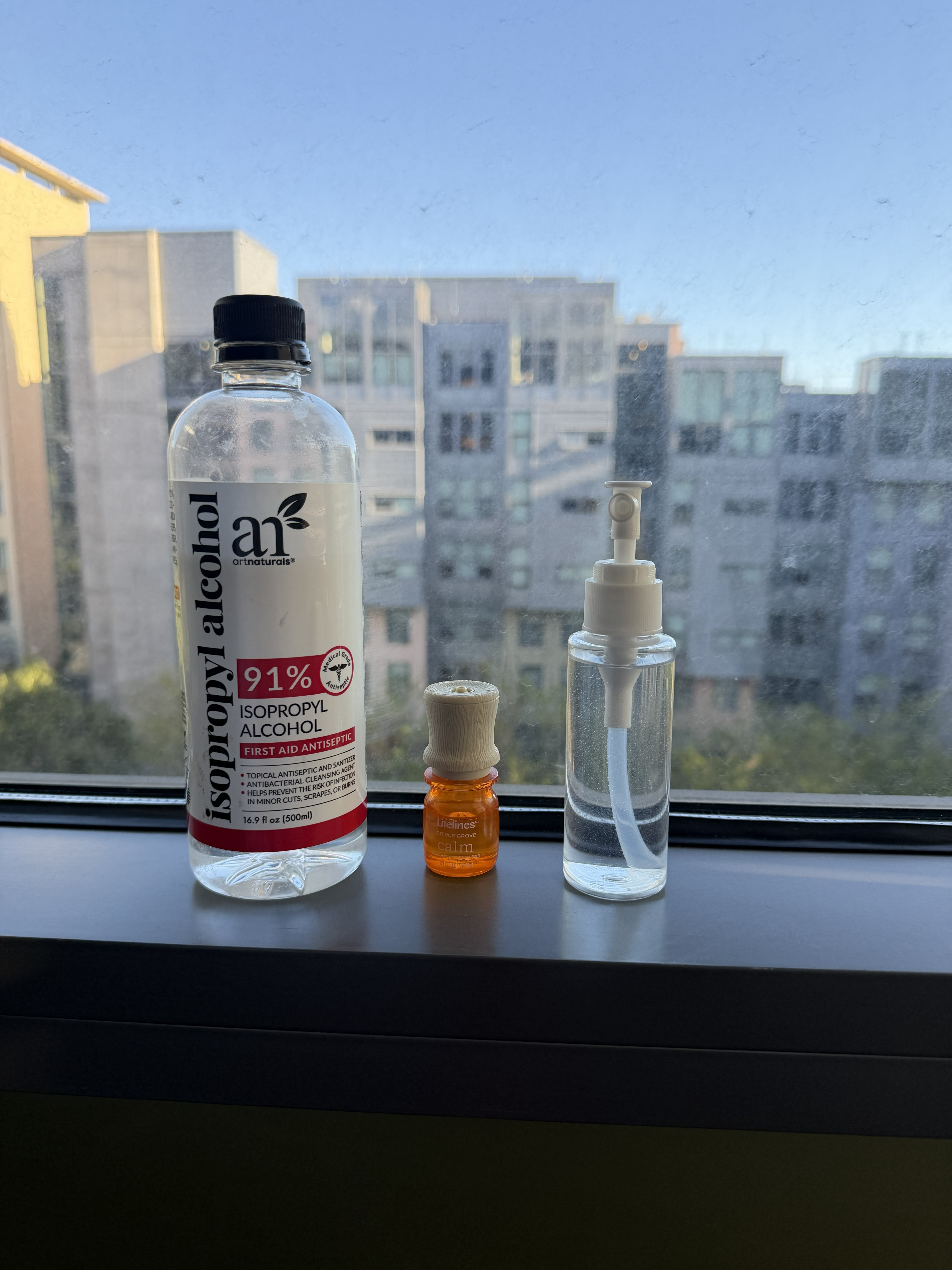
The odor control system was designed with both sanitation and user experience in mind. A 70% isopropyl alcohol solution was selected for cleaning due to its effectiveness as a disinfectant, as this concentration optimizes microbial denaturation while maintaining sufficient water content for improved surface penetration.

Initial attempts to incorporate alcohol-based scenting were unsuccessful due to rapid evaporation and limited persistence of odor masking. As a result, the design was modified to utilize oil-based scents, which provide longer-lasting fragrance retention and improved odor control within the enclosed system.
Chemical Design
Materials and System Design

Materials and System Considerations

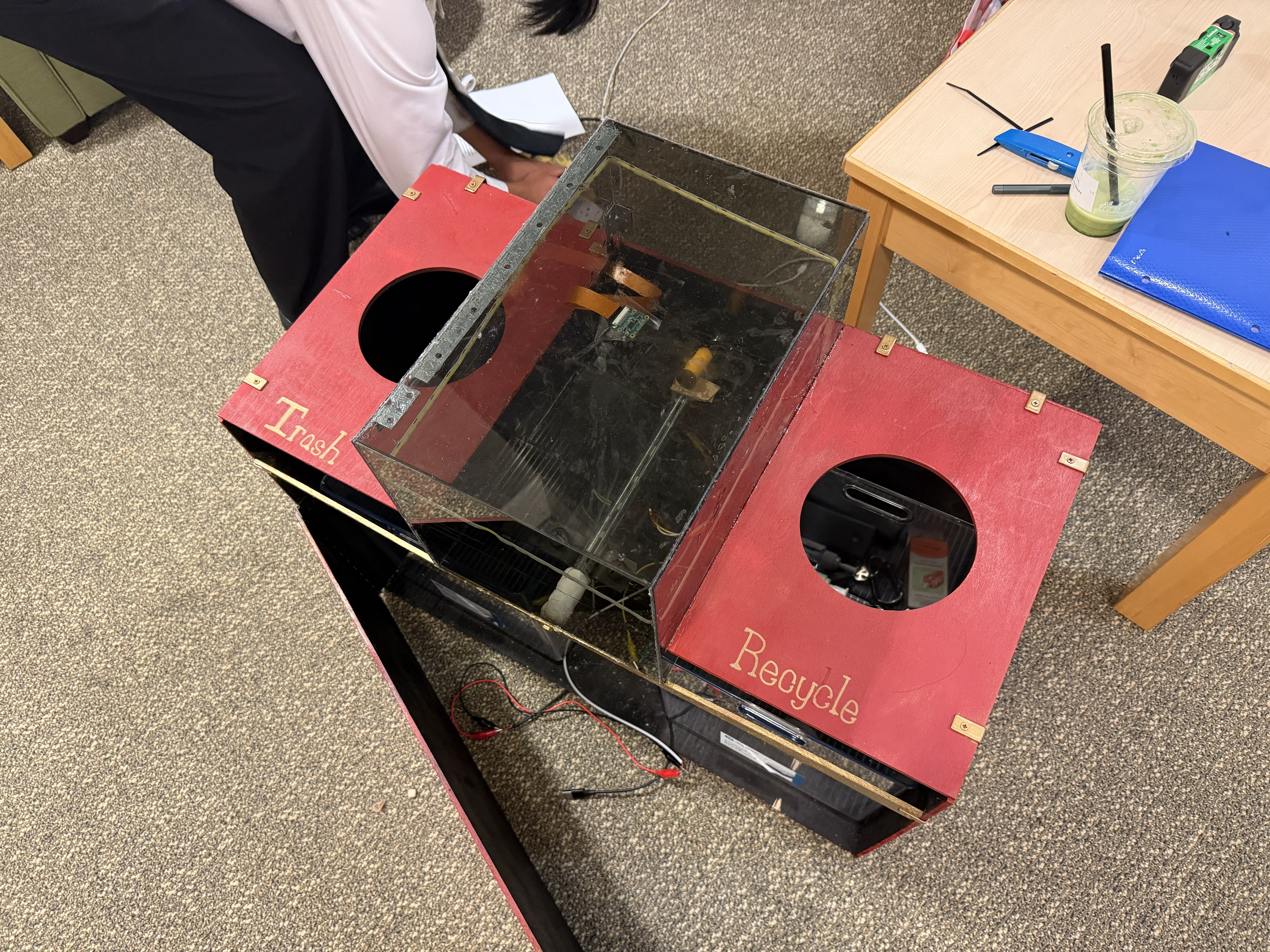
Material selection was guided by durability, manufacturability, and exposure to waste conditions. The primary container was constructed from polycarbonate due to its partial water resistance and ability to withstand prolonged exposure to moisture from wet waste without significant degradation.

In contrast, the supporting structural components were fabricated from wood, as it allowed for easier machining, cutting, and rapid prototyping compared to polycarbonate. This combination enabled a balance between functional performance in critical areas and efficient fabrication for the overall system.